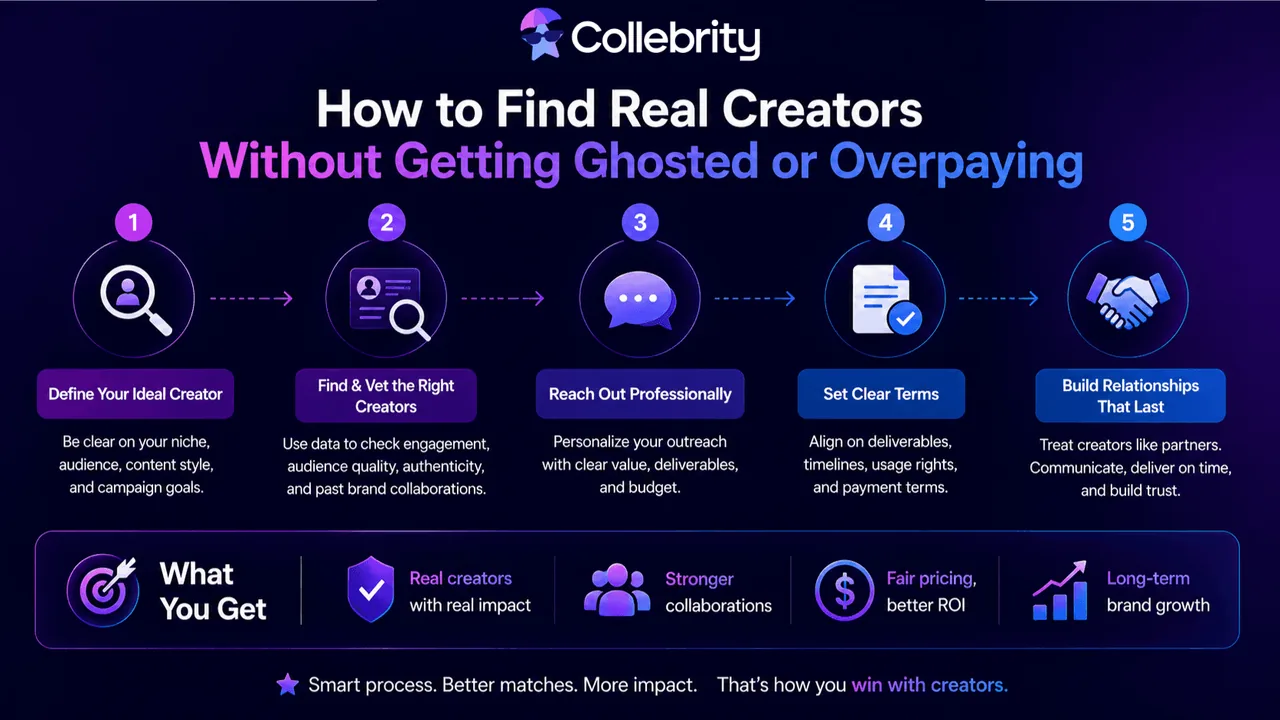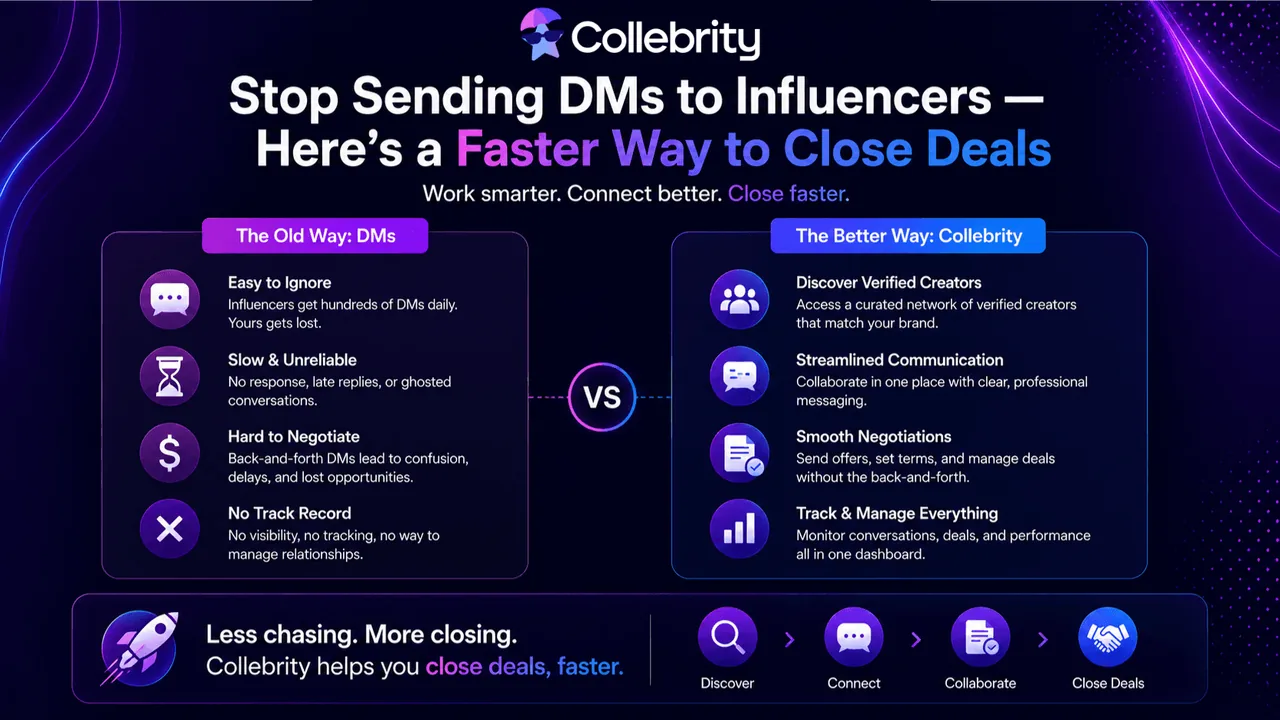

Managing one creator is a partnership. Managing ten is a job. Managing fifty is a logistics nightmare unless you have a system. As we move through 2026, Large-scale creator campaigns are becoming increasingly common for modern brands. But many teams are still trying to manage these large groups using spreadsheets and shared Google Drives. This is why campaigns feel chaotic, deadlines are missed, and the content feels inconsistent. To manage 50+ creators without losing your mind, you need structured workflows and organized collaboration systems.
The Pipeline vs. The Spreadsheet
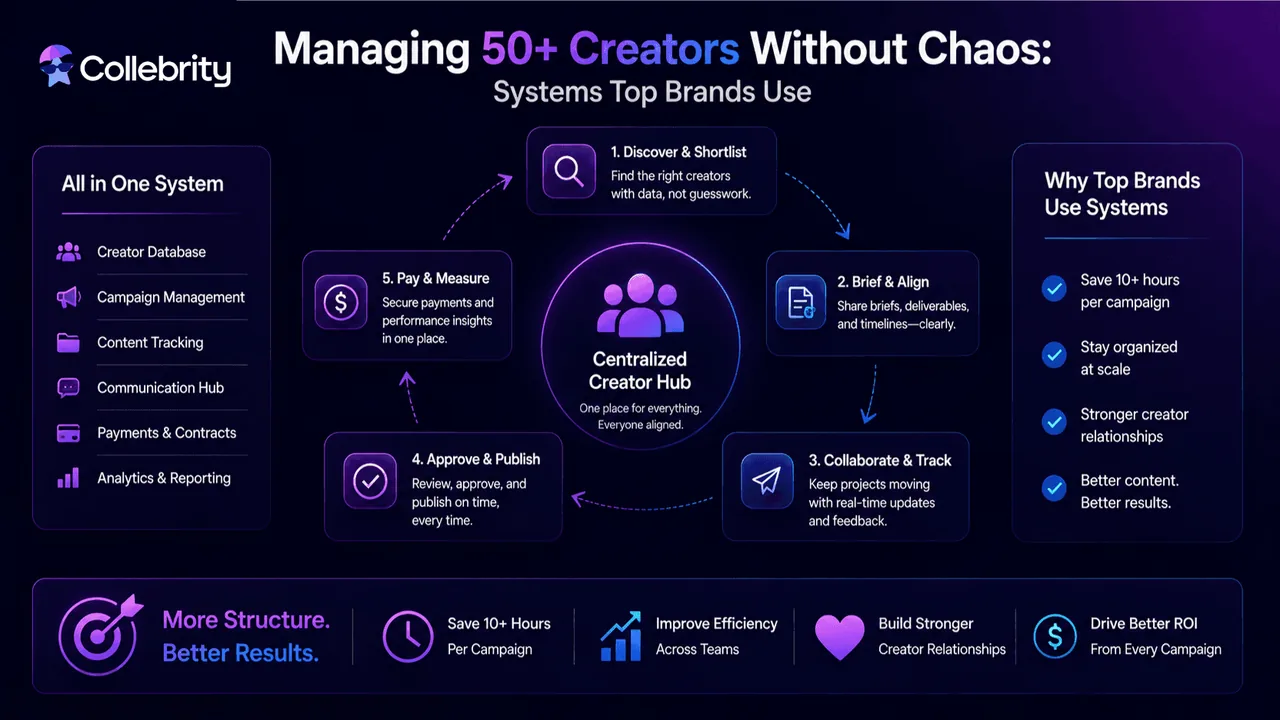
A spreadsheet is a static record of what happened in the past. A pipeline is a living view of what is happening right now. Top brands in 2026 use centralized collaboration dashboards to see their 50+ creators organized by "Status." At a single glance, a manager can see: Who has accepted the deal? Who is currently working on deliverables? Who has submitted the draft? Who has posted?
This level of organization makes large creator campaigns much easier to manage. Instead of manually following up with every creator for updates, teams can track collaboration progress, deliverables, and timelines in one place. Structured workflows reduce the amount of time spent on coordination and allow teams to focus more on campaign quality, creative direction, and performance.
When brands manage dozens of creators manually, a large portion of the effort goes into checking statuses, searching for files, and following up on deadlines. Organized systems help reduce this operational overhead, making it easier for teams to focus on strategy and content quality rather than constant back-and-forth communication.
Centralized Asset Management
When dozens of creators are submitting videos, managing content across Google Drive links, emails, WhatsApp chats, and file-sharing platforms quickly becomes difficult. Keeping creator deliverables organized in one place makes campaigns significantly easier to manage and helps teams work more efficiently.
A centralized workflow allows marketing teams to quickly access creator content, review deliverables, and reuse approved assets across social media, paid campaigns, and other marketing channels. It also reduces common delays like searching for updated files, requesting higher-quality versions, or tracking down missing footage.
Having campaign content organized in a structured system also helps brands identify creative patterns and trends more easily. Teams can compare styles, hooks, formats, and content approaches across multiple creators to understand what performs best. When file management becomes organized, brands can spend less time coordinating assets and more time optimizing campaigns. Systems don’t just save time, they help teams make better creative decisions.
Simplifying the Operational Side of Creator Campaigns
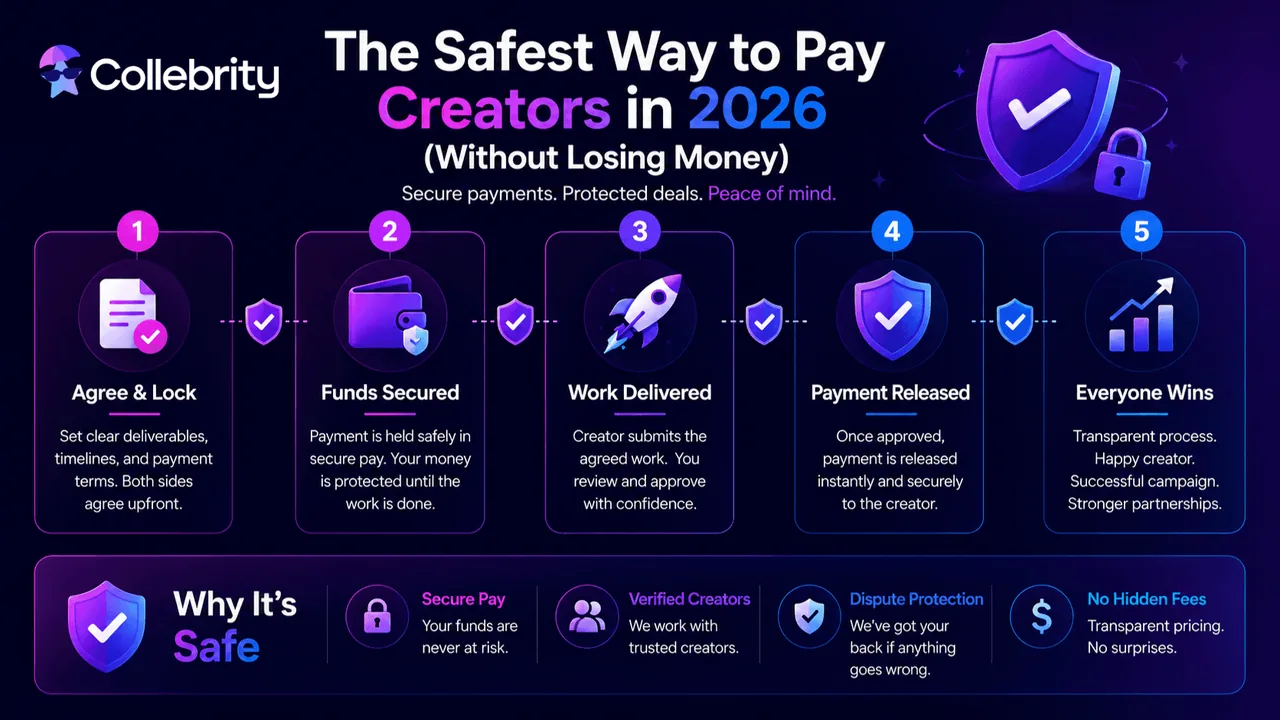
A major challenge in managing large creator campaigns often comes from the operational side — payments, agreements, approvals, deliverables, and coordination. As the number of creators increases, handling everything manually through spreadsheets, emails, and bank transfers quickly becomes difficult and time-consuming.
Structured marketplace workflows help simplify these processes by keeping collaboration details, communication, and payment management organized in one place. Instead of managing multiple disconnected workflows, brands can coordinate campaigns more efficiently through a centralized system like Collebrity SecurePay.
Clear collaboration structures also help reduce confusion around deliverables, timelines, and usage expectations. As creator campaigns continue to scale in 2026, operational efficiency becomes just as important as creative execution. Brands that build organized systems are able to manage larger campaigns more smoothly, reduce unnecessary friction, and focus more on campaign performance instead of administrative coordination.
Achieving Operational Excellence
Operational excellence is the quiet engine behind every viral campaign. While the world sees the flashy content, the brand manager sees a perfectly synchronized production line. Managing 50+ creators requires a shift in perspective where the platform becomes your co-manager.
This allows you to treat creators as a collective marketing force rather than managing every collaboration manually. In 2026, the brands that scale are the ones that focus less on manual coordination and more on scalable campaign management. When you remove the chaos, you leave room for the magic to happen, ensuring that every creator in your roster is empowered to deliver their absolute best work.