
If you ask any brand manager in 2026 what their biggest bottleneck is, they won’t say finding creators is the problem; they’ll say managing collaborations is. For a long time, the industry was trapped in a manual cycle that looked more like a garage sale than a professional marketing operation. You would find an influencer, send a DM, wait three days, negotiate a price, wait another two days, send a product, and hope for the best. In a world where trends move at the speed of a scroll, this slow workflow can seriously reduce campaign momentum and efficiency.
The Death of the 20-Step Outreach
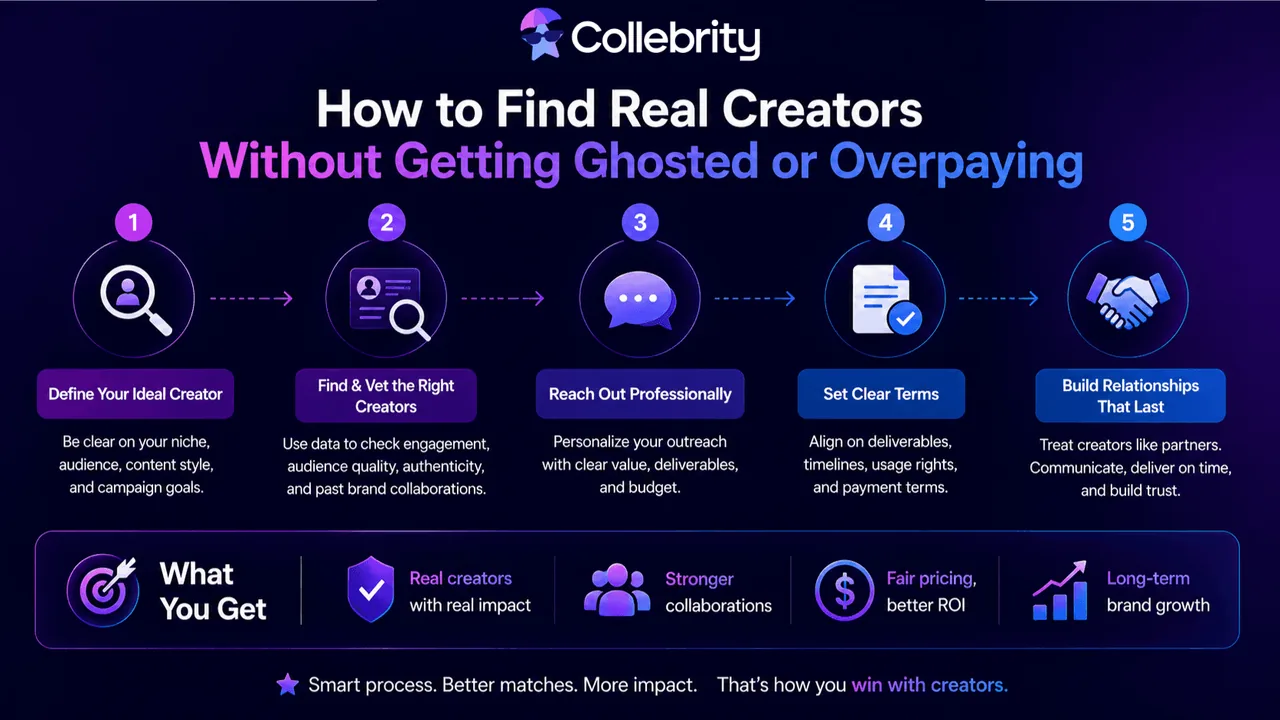
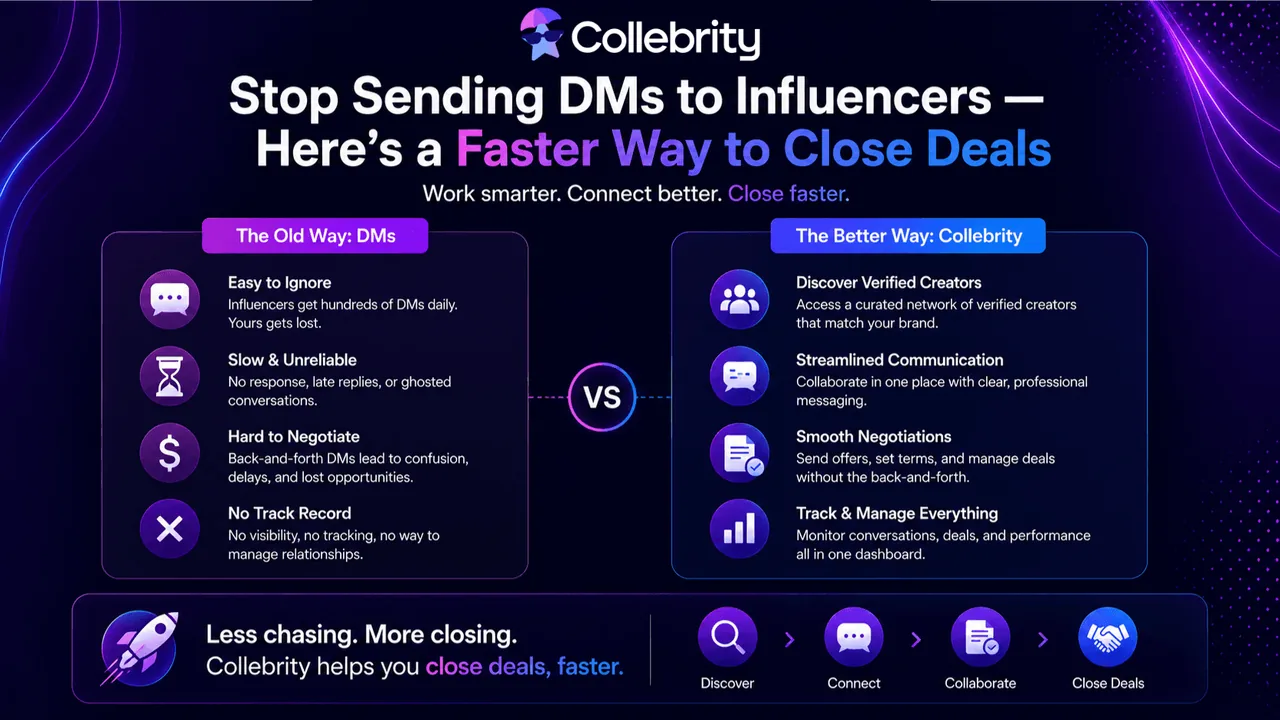
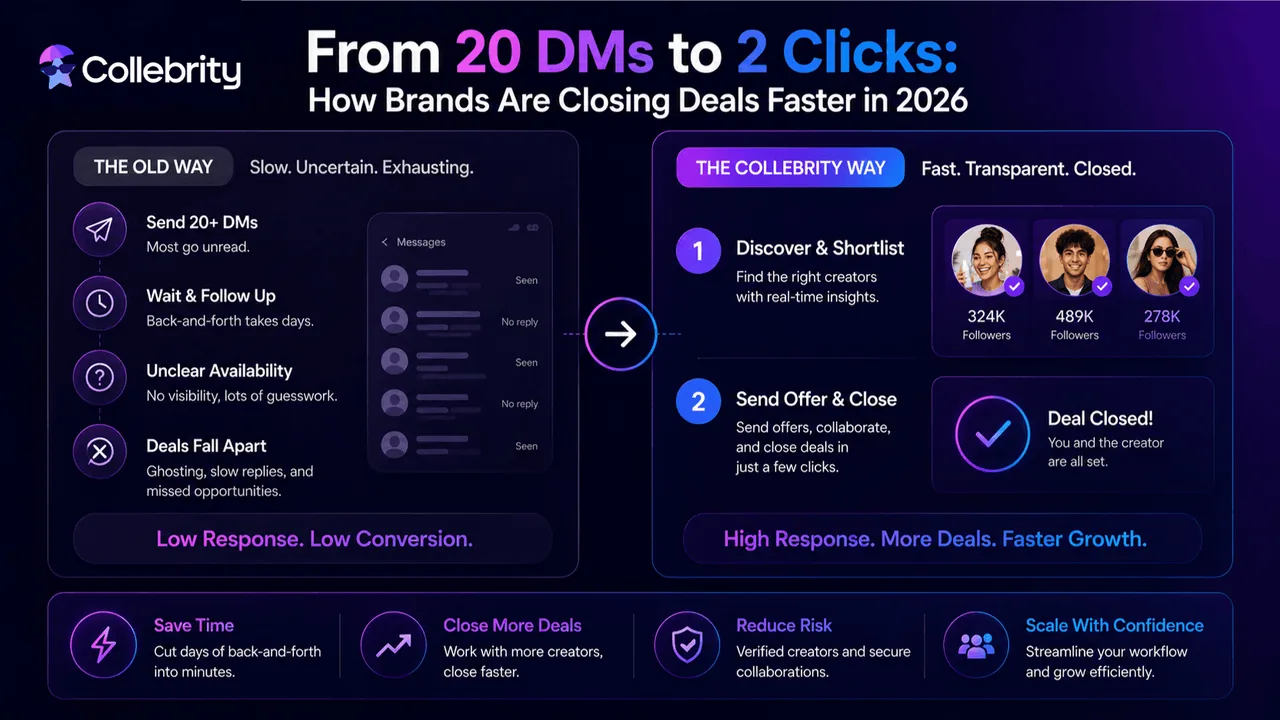
Traditional creator outreach often involves too many manual steps. Every step from the initial "Hello" to the final "Thank you" is a point where the deal can fail. When a brand manager has to manage 20 different conversations across three different platforms just to get 5 videos, they spend more time coordinating than actually running campaigns. In 2026, the brands that are winning are the ones that have compressed this 20-step nightmare into 2 clicks.
Marketplaces like Collebrity have replaced scattered communication with structured workflows. Instead of asking for a media kit, you see it live. Instead of asking for a price, you see the package. Campaign expectations and deliverables can be discussed more clearly upfront. By removing the need for a "chat" before a "deal," brands are saving hundreds of hours per month. This isn't just about saving time; it’s about capturing the moment. If a sound is trending on Instagram or TikTok today, you need your creators posting tomorrow, not in three weeks when the contract is finally signed.
Standardizing the Briefing Process
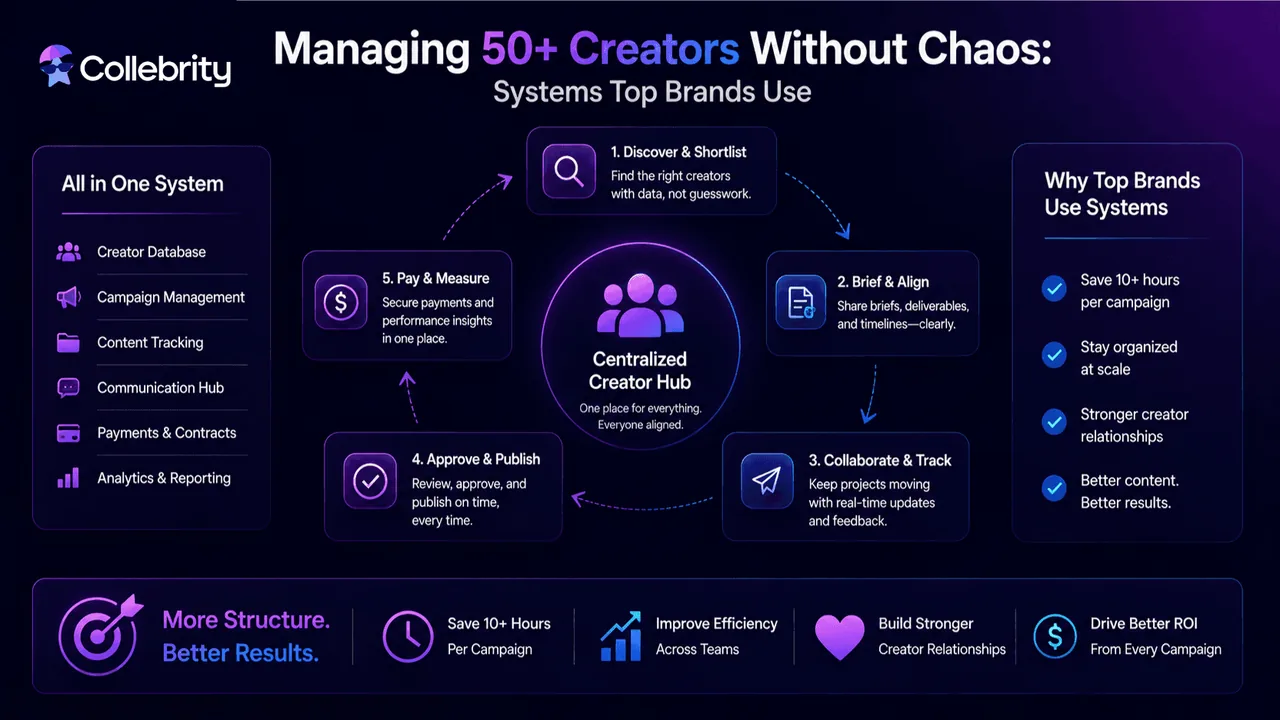
One of the main reasons deals take so long manually is that the "Brief" is often lost in translation. One creator gets a WhatsApp message, another gets an email, and a third gets a DM. This lack of standardization leads to poor content, which leads to revisions, which leads to more delays. A centralized marketplace solves this by encouraging a more structured briefing process.
When a brand clicks "Order," they fill out a structured brief that covers campaign goals, deliverables, timelines, expectations and the Delivery Date. The creator receives this in a clean, professional dashboard.
There is no "I didn't see that message" or "I thought you meant something else." By front-loading the information, brands eliminate the back-and-forth that often slows down creator collaborations. In 2026, clarity is the fastest currency. When the expectations are 100% clear from the start, the execution happens at lightning speed.
Real-Time Scale: The Competitive Advantage
The ability to move from 20 DMs to 2 clicks allows a brand to scale horizontally. In the old world, if you wanted to work with 100 creators, you needed a team of 10 people. In 2026, a single brand manager can manage 100 deals because the system is doing the heavy lifting. This scalability is the ultimate competitive advantage. While your competitors are still waiting for "Influencer A" to check their DMs, you have already booked 50 "Influencer Bs" and your campaign is already live.
This speed also improves your relationship with the creators. Top-tier creators in 2026 are busy. They don't want to spend their day chatting; they want to spend their day creating. When a brand makes it easy for a creator to accept a deal and get to work, that brand becomes the Preferred Partner. You aren't just closing deals faster; you are building a reputation as the most professional brand in the space. Efficient workflows help brands move faster and collaborate more professionally.
Maximizing the 2026 Momentum
In today’s fast-moving digital landscape, the speed between an idea and its execution plays a major role in how brands stay relevant. Relying only on manual outreach and scattered conversations can slow campaigns down and make it harder to respond to trends in real time. By using structured creator marketplaces and organized workflows, brands can move faster, collaborate more efficiently, and launch campaigns with far less friction.
This level of responsiveness helps modern brands stay active in ongoing cultural and social conversations. In 2026, the brands that stand out are the ones that are organized, adaptable, and respectful of creators’ time. When collaboration becomes faster and more structured, both brands and creators can focus more on creating impactful content instead of managing endless back-and-forth communication.